


The Philippines is one of the many countries in Southeast Asia that have extensively pursued economic zone development. These zones have continuously evolved over time, with significant consequences.
The Special Economic Zone of Thilawa epitomizes the essence of Japan’s new ‘infrastructural means for strategic ends’ approach to ODA policy, inaugurated by Abe.
The Tatmadaw may still be satisfied enough with the semi-democratic regime it created and may want to return to it at some point – just after securing a suitable Commander-in-Chief and fixing some issues it is not entirely happy about.
“Italy is home to the Torino World Affairs Institute (T.wai), which maintains strong Asia-focused research programmes. France is home to think tanks such as the Institut français des relations internationales (IFRI) and the Institut de relations internationales et stratégiques (IRIS), both of which have well-established expertise on Asia.”
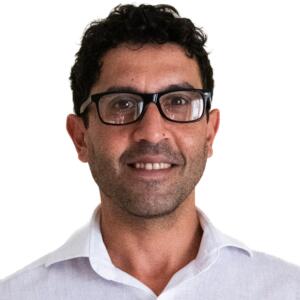
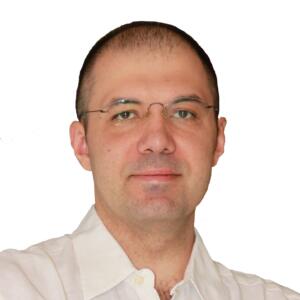
Anna Caffarena is Full Professor of International Relations at the University of Torino and the Director of its Department of Cultures, Politics and Society. She has served as the first President of the Torino World Affairs Institute.
Prof. Giuseppe Gabusi is Associate Professor of International Political Economy and Political Economy of East Asia at the Department of Cultures, Politics and Society of the University of Turin. He is Head of T.wai's Indo-Pacific Program.
Pietro Masina is a non-resident Research Fellow at T.wai and a Full Professor of International Political Economy, History and Institutions of East Asia at the University of Naples “L'Orientale”.
Prof. Giorgio Prodi is Associate Professor of Applied Economics at the University of Modena and Reggio Emilia. He serves as Vice President of T.wai, the Torino World Affairs Institute.