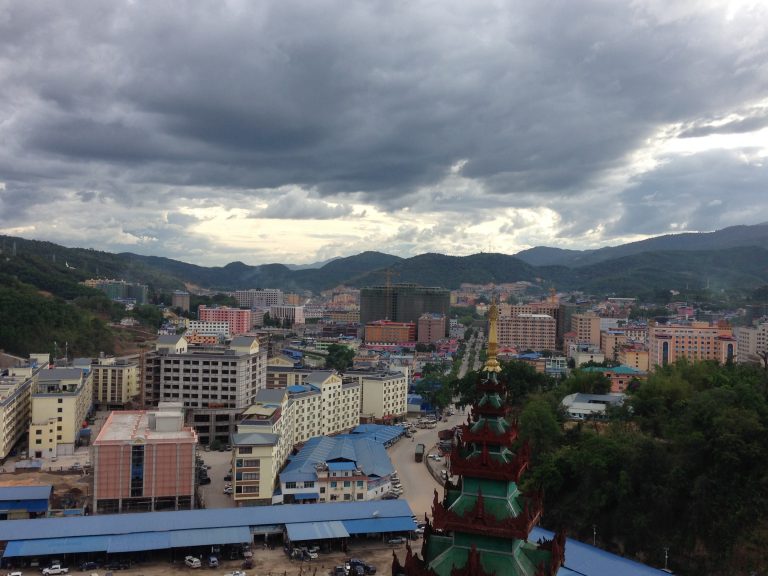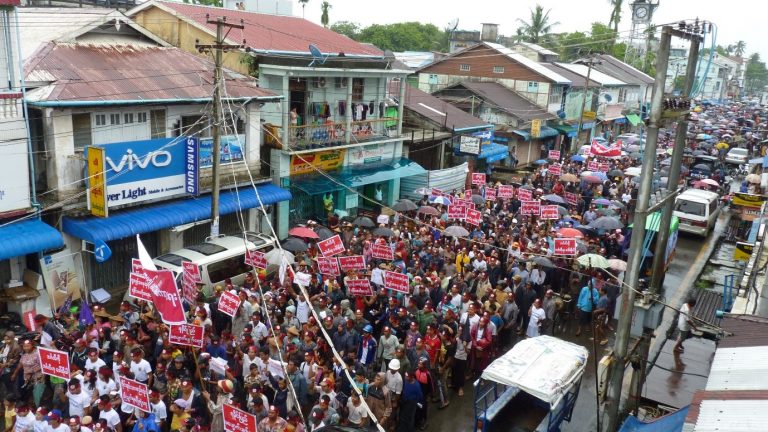



[IT] A distanza di diciotto mesi, RISE ritorna in Myanmar. Lo fa con un numero doppio rispetto alle solite dimensioni della rivista, un riflesso del particolare interesse di ricerca che T.wai nutre per questo Paese del Sud-est asiatico. Avevamo lasciato il Myanmar subito dopo le elezioni del novembre 2015, e…
The 21st Century Panglong Union Peace Conference attests to the most contemporary relevance of the country’s historic planning by exploiting the name Panglong in its title. Yet, what this will entail for the future of ethnic nationalities in contemporary Myanmar is still unclear.
Since the National League for Democracy's landslide November 2015 election victory, discussions on Myanmar's future have taken an interesting turn. Once again, Aung San Suu Kyi is confronted with challenges that could potentially jeopardize her moral and political authority.
In a rapidly changing world, middle powers with no obvious role to play on the global stage have the difficult task to read the international environment in order to formulate and implement a coherent and possibly effective foreign policy. In order to do so, decision makers either reproduce old ideas…
For years, most of Myanmar’s ethnic minorities, including the Kachin, have put their faith in Aung San Suu Kyi to reconcile the country. Her landslide victory in the country’s historic 2015 elections, was not least secured through the support from ethnic minority voters. As armed conflict has continued and even…
“This alignment between French and Italian priorities finds its most tangible expression in a shared commitment to regional multilateralism – one that necessarily entails stronger ties with ASEAN and support for its centrality in the Indo-Pacific architecture. This ambition has already taken concrete institutional form when the EU and ASEAN elevated their relationship to a Strategic Partnership in 2020. Enhanced cooperation between the two blocs would also reduce vulnerability to unilateral pressure from China and the United States, thereby fostering a more balanced multilateral framework.”
Anna Caffarena is Full Professor of International Relations at the University of Torino and the Director of its Department of Cultures, Politics and Society. She has served as the first President of the Torino World Affairs Institute.
Prof. Giuseppe Gabusi is Associate Professor of International Political Economy and Political Economy of East Asia at the Department of Cultures, Politics and Society of the University of Turin. He is Head of T.wai's Indo-Pacific Program.
Pietro Masina is a non-resident Research Fellow at T.wai and a Full Professor of International Political Economy, History and Institutions of East Asia at the University of Naples “L'Orientale”.
Prof. Giorgio Prodi is Associate Professor of Applied Economics at the University of Modena and Reggio Emilia. He serves as Vice President of T.wai, the Torino World Affairs Institute.