


Asia's regionalization trend led to the formulation of numerous economic cooperation initiatives. These, however, often lack a clear implementation strategy.
Several major confrontations have occurred in Arakan since World War II, creating lasting distrust between the followers of different religious creeds. These conflicts are related to issues which all have their roots deep in the country’s past.
[IT] "Anniversario dell'indipendenza dell'Indonesia: il futuro del Paese", Giuseppe Gabusi (Università degli Studi di Torino) interviene a Radio Vaticana.
“This alignment between French and Italian priorities finds its most tangible expression in a shared commitment to regional multilateralism – one that necessarily entails stronger ties with ASEAN and support for its centrality in the Indo-Pacific architecture. This ambition has already taken concrete institutional form when the EU and ASEAN elevated their relationship to a Strategic Partnership in 2020. Enhanced cooperation between the two blocs would also reduce vulnerability to unilateral pressure from China and the United States, thereby fostering a more balanced multilateral framework.”
Anna Caffarena is Full Professor of International Relations at the University of Torino and the Director of its Department of Cultures, Politics and Society. She has served as the first President of the Torino World Affairs Institute.
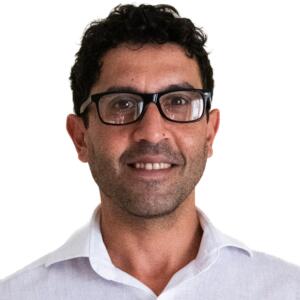
Prof. Giuseppe Gabusi is Associate Professor of International Political Economy and Political Economy of East Asia at the Department of Cultures, Politics and Society of the University of Turin. He is Head of T.wai's Indo-Pacific Program.
Pietro Masina is a non-resident Research Fellow at T.wai and a Full Professor of International Political Economy, History and Institutions of East Asia at the University of Naples “L'Orientale”.
Prof. Giorgio Prodi is Associate Professor of Applied Economics at the University of Modena and Reggio Emilia. He serves as Vice President of T.wai, the Torino World Affairs Institute.