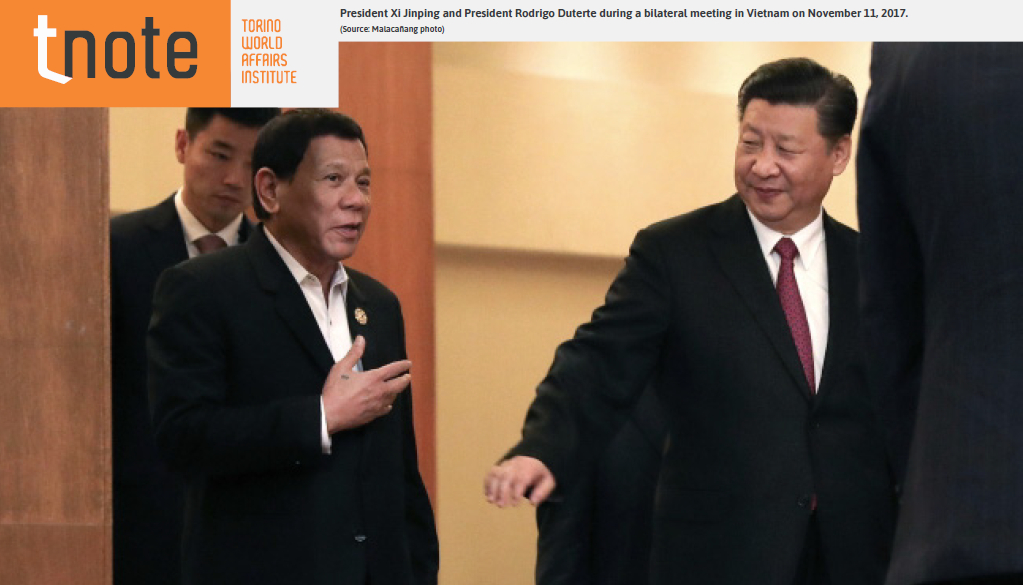
[IT] Il 19° congresso nazionale del Partito comunista cinese non ha soltanto confermato Xi Jinping alla carica di Segretario generale e Presidente della Commissione militare centrale: l’ha di fatto consacrato in una posizione di primus inter inferiores che non ha precedenti nella vicenda politica cinese degli ultimi vent’anni.
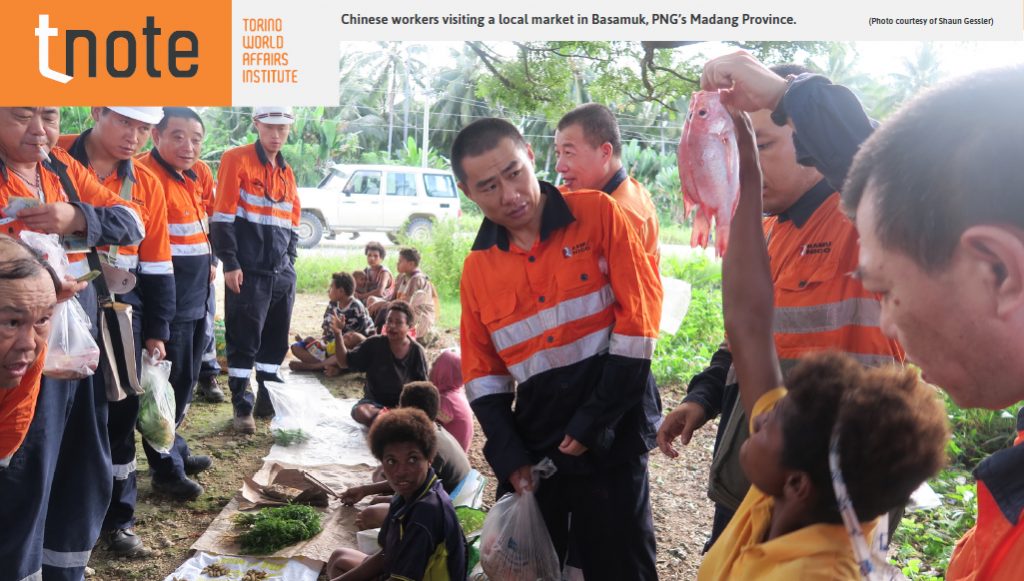
It would be erroneous to see Southeast Asia as little more than an object for strategic competition between Beijing, on one hand, and Washington and its allies, on the other.
[IT] Giovanni Andornino (Università degli Studi di Torino) partecipa come ospite alla puntata "La visita di Trump in Cina" condotta da Valeria Manieri per AgiChina.
[IT] "Perché Xi Jinping non è Mao, ma potrebbe cambiare la Cina più del Grande Timoniere", Alessandra Spalletta (AgiChina) intervista Giovanni Andornino (Università degli Studi di Torino) e Filippo Fasulo (Fondazione Italia Cina).
[IT] "Il 'Xi pensiero' che rivoluzionerà la Cina (e il mondo)", Alessandra Spalletta (AgiChina) intervista Giovanni Andornino (Università degli Studi di Torino).
“Ultimately, the future of global economic stability may depend on China’s willingness to reconsider the logic that has underpinned its ascent. Since 1949, the Chinese Communist Party’s anti-hegemonic strategy has been remarkably successful in reshaping the international environment and creating space for China’s extraordinary rise—an achievement rooted above all in the hard work, discipline, and resilience of the Chinese people. Yet history offers a cautionary lesson. Great powers encounter danger when they cease to view success as the product of contingency and effort and begin to view it instead as the expression of historical destiny. If Beijing falls into this trap, and refuses to heed Western warnings, it will trigger a vicious trade war that will leave the world much worse off, and the dream of China’s national rejuvenation in tatters.”