


The Tatmadaw may still be satisfied enough with the semi-democratic regime it created and may want to return to it at some point – just after securing a suitable Commander-in-Chief and fixing some issues it is not entirely happy about.
[IT] L'intervista rilasciata da Stefano Ruzza (T.wai & Università degli Studi di Torino) sulla crisi in Myanmar, nell'articolo di Elisa Ugolini per Geopolitica.info.
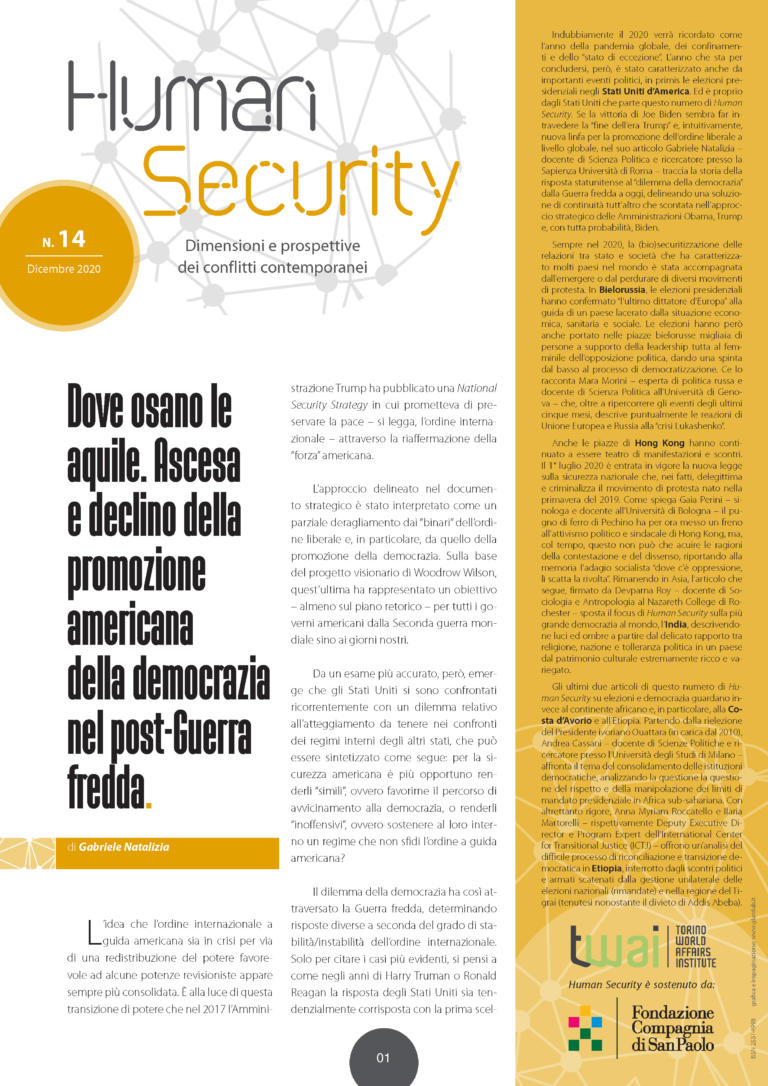
[IT] Indubbiamente il 2020 verrà ricordato come l’anno della pandemia globale, dei confinamenti e dello “stato di eccezione”. L’anno che sta per concludersi, però, è stato caratterizzato anche da importanti eventi politici, in primis le elezioni presidenziali negli Stati Uniti d’America. Ed è proprio dagli Stati Uniti che parte questo…
A functioning and inclusive political settlement rather than institutional capacity narrowly conceived is necessary for building legitimacy across society for any new ‘post-conflict’ dispensation.
“The SIPRI Yearbookis known worldwide as an authoritative and independent source for politicians, diplomats, journalists, scholars, students and citizens on armaments, disarmament and international security. It provides an overview of developments in international security, weapons and technology, military expenditure, the arms trade and arms production, and armed conflicts, along with efforts to control conventional, nuclear, chemical and biological weapons. Key findings of SIPRI Yearbook 2026 are that states are increasingly relying on nuclear weapons as instruments of national power—reversing decades of efforts to reduce the numbers and role of nuclear weapons—even as the risks of miscalculation and escalation are rising.“
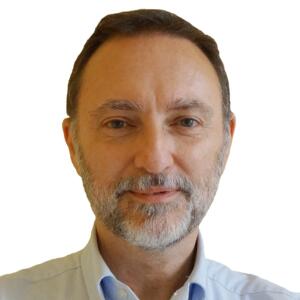
Dr. Edoardo Maria Landoni is a Research Fellow affiliated with the Violence & Security Program at T.wai and Teaching Assistant at the University of Milan.
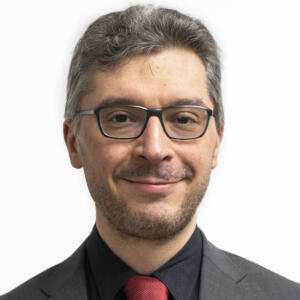
Prof. Stefano Ruzza is Associate Professor of Political Science at the Department of Cultures, Politics and Society of the University of Turin. He is Head of T.wai's Violence & Security Program.