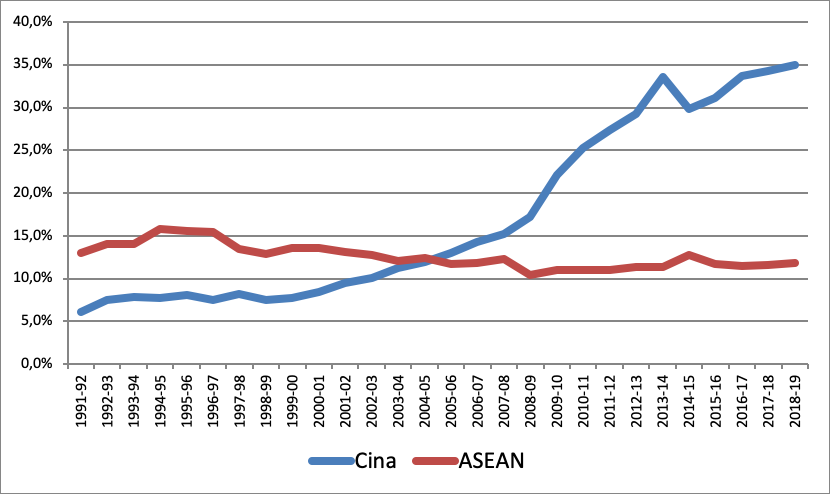
[IT] La Malaysia è ormai un hub manifatturiero con eccellenze in settori ad alto contenuto tecnologico e si appresta a entrare tra i paesi ad alto reddito. Nel 2019 Banca Mondiale l’ha collocata in quindicesima posizione nella propria classifica Doing Business per la capacità dimostrata nell’agevolare l’attività economica. Riflesso di…
[IT] L'articolo "La regolamentazione delle armi autonome: letteratura o diritto?" di Andrea Spagnolo, su Human Security n. 7, viene citato su Esquire in "La Russia vuole formare un esercito composto da robot entro 5 anni".
[IT] Giuseppe Gabusi (T.wai & Università di Torino) è intervenuto sul tema "Il mondo oltre il coronavirus. De-globalizzazione e Guerra Fredda 2.0?" nel corso di geopolitica "Fabula Mundi 2020", organizzato da ACLI Brescia.
[IT] Enrico Fardella (T.wai & Peking University) spiega su Formiche perchè l'Assemblea nazionale del popolo (Anp) sia importante nel delineare la strategia futura della Cina nel sistema economico mondiale.
“Ultimately, the future of global economic stability may depend on China’s willingness to reconsider the logic that has underpinned its ascent. Since 1949, the Chinese Communist Party’s anti-hegemonic strategy has been remarkably successful in reshaping the international environment and creating space for China’s extraordinary rise—an achievement rooted above all in the hard work, discipline, and resilience of the Chinese people. Yet history offers a cautionary lesson. Great powers encounter danger when they cease to view success as the product of contingency and effort and begin to view it instead as the expression of historical destiny. If Beijing falls into this trap, and refuses to heed Western warnings, it will trigger a vicious trade war that will leave the world much worse off, and the dream of China’s national rejuvenation in tatters.”