


Building back better requires integrated approaches that address the impacts of COVID-19 across sectors, including health, environment, climate and urban planning.
For understandable reasons, we often focus on immediate problems. But we risk overlooking important parts of the evidential trail if we do not try to understand the long-term processes that account for present-day circumstances.
Peacebuilding requires long-term and sustained efforts at all levels, and in some cases may have been complicated by the ways in which armed groups have strengthened their position through their response to the pandemic.
Despite rapid intervention and a high level of community engagement, the scale of the damage suffered by the city of Beirut goes beyond the scope of the humanitarian response.
“The SIPRI Yearbookis known worldwide as an authoritative and independent source for politicians, diplomats, journalists, scholars, students and citizens on armaments, disarmament and international security. It provides an overview of developments in international security, weapons and technology, military expenditure, the arms trade and arms production, and armed conflicts, along with efforts to control conventional, nuclear, chemical and biological weapons. Key findings of SIPRI Yearbook 2026 are that states are increasingly relying on nuclear weapons as instruments of national power—reversing decades of efforts to reduce the numbers and role of nuclear weapons—even as the risks of miscalculation and escalation are rising.“
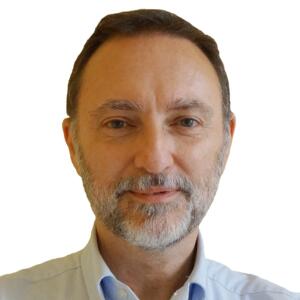
Dr. Edoardo Maria Landoni is a Research Fellow affiliated with the Violence & Security Program at T.wai and Teaching Assistant at the University of Milan.
Prof. Stefano Ruzza is Associate Professor of Political Science at the Department of Cultures, Politics and Society of the University of Turin. He is Head of T.wai's Violence & Security Program.