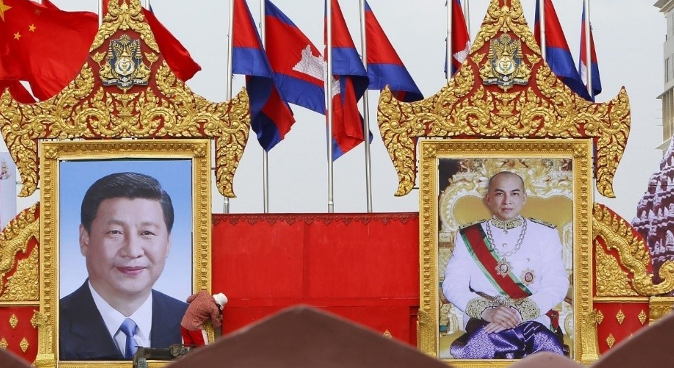
Over the past six months, Cambodian prime minister Hun Sen has begun to rapidly consolidate control over his country in the lead up to scheduled 2018 parliamentary elections.
[IT] Daniele Brombal (T.wai & Università Ca' Foscari Venezia) interviene nella puntata "La Rivolta della Natura" del programma TV Storia diretto da Massimo Bernardini (Rai Storia).
[IT] Giovanni Andornino (Università degli Studi di Torino & T.wai - Torino World Affairs Institute) racconta la Cina del III secolo a.C. e il suo primo Imperatore Qin Shi Huangdi nella puntata di "Passato e Presente".
T.wai’s Research Fellow Daniele Brombal (Ca’ Forcari) gives his contribution in BBC China’s article by Li Zheng: “Reality Check: Is Beijing's air quality better this winter?”
[IT] Giuseppe Gabusi (T.wai - Torino World Affairs Institute & Università degli Studi di Torino) ospite a Radio Radicale nella puntata "AgiChina: le sorti dei profughi Rohingya, la visita del Papa, gli equilibri in Myanmar".
“Ultimately, the future of global economic stability may depend on China’s willingness to reconsider the logic that has underpinned its ascent. Since 1949, the Chinese Communist Party’s anti-hegemonic strategy has been remarkably successful in reshaping the international environment and creating space for China’s extraordinary rise—an achievement rooted above all in the hard work, discipline, and resilience of the Chinese people. Yet history offers a cautionary lesson. Great powers encounter danger when they cease to view success as the product of contingency and effort and begin to view it instead as the expression of historical destiny. If Beijing falls into this trap, and refuses to heed Western warnings, it will trigger a vicious trade war that will leave the world much worse off, and the dream of China’s national rejuvenation in tatters.”