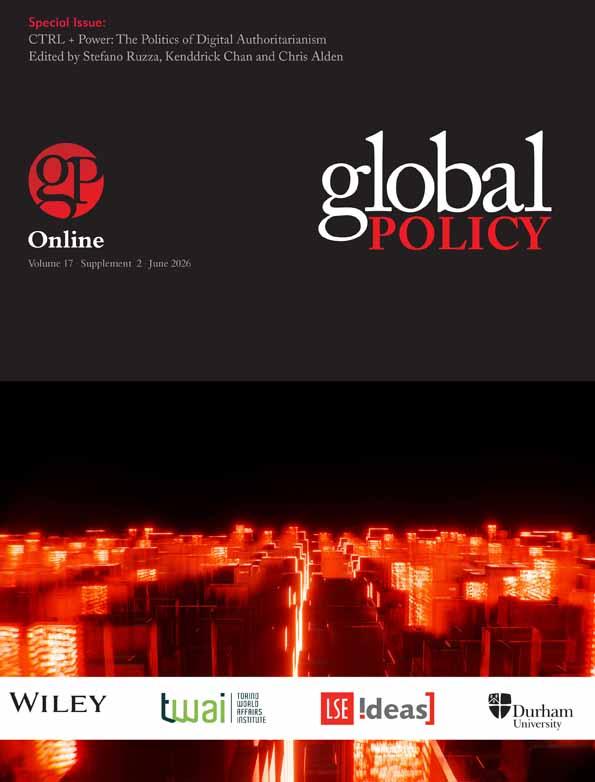
“Governments increasingly recognise that the digital domain can both bolster and undermine regime stability. Authoritarian states have shown notable agility in harnessing digital technologies to consolidate power, whereas democracies, once seen as natural beneficiaries of digital innovation, often struggle to respond effectively. The convergence of rapid technological change, emerging authoritarian threats (both from within and from abroad) and persistent governance gaps underscores the urgency of developing more adaptive strategies. Without proactive policymaking, stronger and better harmonised regulatory frameworks and sustained multilateral cooperation, the unchecked expansion of digital authoritarian practices risks eroding democratic governance from both within and without. This Special Issue examines the evolving dynamics of digital authoritarianism at both domestic and international levels and explores the range of policy options available to mitigate and counter the effects of digitally enabled authoritarian practices, whether homegrown or externally driven.”
The special issue “CTRL + Power: The Politics of Digital Authoritarianism” of Global Policy, edited by Stefano Ruzza (T.wai & University of Torino), Kendrick Chan (University of Oxford) and Chris Alden (LSE), is published in open access with the financial support of Fondazione Compagnia di San Paolo. The issue is part of the initiative “CTRL + power: the (geo)politics of digital authoritarianism”, an academic collaboration between T.wai, LSE IDEAS and the University of Torino.