
Date
Southeast Asian Development Trajectories: Types, Policies, Industries
The TOASEAN Summer School 2026 offers an intensive five-day program dedicated to exploring the development trajectories of Southeast Asia, one of the most dynamic and rapidly transforming regions in the world.
Since the 1990s, Southeast Asia has undergone profound economic and social transformations, emerging as the world’s fourth-largest economic area and a leading export hub, while significantly reducing poverty rates. This transformation has not followed a single path; rather, it reflects diverse national strategies, political models, sectoral specializations, and modes of integration into the global economy.
The TOASEAN Summer School addresses this complexity from an interdisciplinary perspective, combining political economy, economic geography, labour studies, and anthropology. It begins by mapping and comparing different development trajectories across the region, highlighting how countries have integrated into global markets through distinct institutional and policy frameworks.
The program examines how urbanization and infrastructure development have accelerated economic integration in Southeast Asia, particularly through the rise of metropolitan regions and connectivity corridors. These processes are closely linked to the expansion of regional production networks and global value chains. It also analyses state-led development models, focusing on public investment strategies and the evolving role of state-owned enterprises in countries such as Vietnam and Singapore.
Finally, the program emphasizes labour as a central but highly segmented factor, exploring labour market transformations, migration flows, and the social consequences of rapid industrialization.
In addition, the TOASEAN Summer School will include a dedicated day focused on the Asian Development Bank, which is headquartered in Manila. During this session, participants will be introduced to the Bank’s mission and core activities, including its role in promoting sustainable economic growth, reducing poverty, and supporting regional integration across Asia and the Pacific. Particular attention will be given to its priority sectors—such as infrastructure, energy transition, climate resilience, digital development, and social services—and to the financial instruments it employs. The session will also highlight the opportunities the Bank offers to international stakeholders, including Italian companies, in areas such as project financing, procurement, public–private partnerships, and technical cooperation initiatives.
The Summer School brings together scholars from leading European and international research institutions, offering participants the opportunity to engage with diverse methodological approaches — from quantitative economic analysis to ethnographic fieldwork — in a highly interactive academic environment.
The program is organized by the University of Torino and T.wai – Torino World Affairs Institute, in collaboration with Inalco – Institut national des langues et civilisations orientales in Paris.
The first edition of the TOASEAN Summer School will take place from Monday, 8 June to Friday, 12 June 2026. Activities — including lectures, seminars, round tables, and extended Q&A sessions — will run daily from 10:00 a.m. to 5:30 p.m. (CET).
To accommodate participants who may not be able to attend in person, the TOASEAN Summer School may also be made available in an online format. In such cases, admitted participants will receive access details ahead of the start of the program.
Hosted at the Campus Luigi Einaudi in Turin, the TOASEAN Summer School is designed for advanced undergraduate and graduate students, doctoral researchers, and professionals interested in Southeast Asia, particularly in the fields of international relations, development studies, political economy, and anthropology.
Successful completion of the Summer School may grant 3 ECTS credits to students enrolled at the University of Turin, as well as to students from other universities, subject to their home institution’s recognition policies for external academic activities.

University of Torino & T.WAI - Torino World Affairs Institute
Giuseppe Gabusi is Head of T.wai’s “Indo-Pacific” Program and an Associate Professor of International Political Economy and Political Economy of East Asia at the University of Torino. He is the Director of the TOASEAN Summer School.

Inalco & Center for Southeast Asian Studies (CASE)
Elsa Lafaye de Micheaux is Professor of Political Economy at the National Institute for Oriental Languages and Civilizations (Inalco, Paris). Trained at the École Normale Supérieure (Cachan), she earned her PhD in economics in 2001 with a dissertation on education and growth in Malaysia. Her research focuses on Malaysian capitalism in historical perspective, China–Southeast Asia economic relations, labour regimes, and regional political economy. She is the author of The Development of Malaysian Capitalism: From British Rule to the Present Day (2017) and co-editor of the Palgrave Handbook on Political Norms in Southeast Asia (2024). Since 2018, she has led the ASEAN–China Norms international research network.
Inalco & Center for Social Sciences on African American and Asian Worlds (CESSMA)
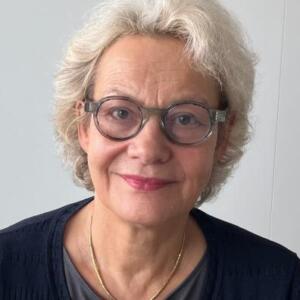
Manuelle Franck is Professor of Geography at the National Institute for Oriental Languages and Civilizations (Inalco, Paris), where she served as President from 2013 to 2019. She is also a researcher at CESSMA (Centre for Social Sciences on African, American and Asian Worlds). A specialist in Southeast Asian urban and regional geography, particularly Indonesia, her research focuses on urbanization processes, metropolitanization, new capital cities, territorial reorganization, and regional integration dynamics. Her recent work examines infrastructure development and Chinese financial flows in Southeast Asia. She is co-author of La région Asie du Sud-Est (Armand Colin, 2024) and co-editor of Lire la ville, éclairer la métropolisation depuis l’Asie du Sud-Est (IRASEC, 2024).
Asia Society
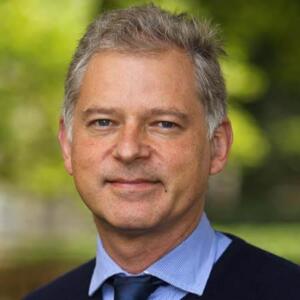
Philippe Le Corre is a professor of geopolitics and Asian studies at ESSEC Business School (Paris and Singapore). He is also a senior research fellow at the Asia Society Policy Institute in Washington and a geopolitical advisor to Asia Society France. Philippe has been working for various think-tanks and universities since 2013. He was a researcher at two of Washington’s leading think tanks, the Brookings Institution and the Carnegie Endowment for International Peace, and subsequently a senior fellow at Harvard Kennedy School. Philippe has chaired both the Harvard Club of France and the Foreign Press Association in London. He is the author or co-author of around ten books translated into several languages, including Traversing the Belt and Road (Harvard Press, 2026), The China Questions (Harvard Press, 2022), China’s Offensive in Europe (Brookings Press, 2017), and Après Hong Kong (1997). A graduate of INALCO and an expert affiliated with the French Foreign Trade Advisors (CCE), he is also a columnist for Les Echos, Nikkei, and Ouest-France.

French Institute of International Relations
Françoise Nicolas is Senior Advisor to the Center for Asian Studies at the French Institute of International Relations (Ifri), where she served as Director until February 2024. She also teaches at the Institut Français de Géopolitique (Paris 8). Previously, she held academic positions at the University of Paris-Est (Marne-la-Vallée) and taught at Inalco and Sciences Po. A specialist in international and Asian political economy, her research focuses on development strategies in East and Southeast Asia, foreign direct investment and growth, regional economic integration, and Asia–EU economic relations. She has published extensively on economic governance and emerging economies in the context of globalization.
Center for Southeast Asian Studies (CASE)
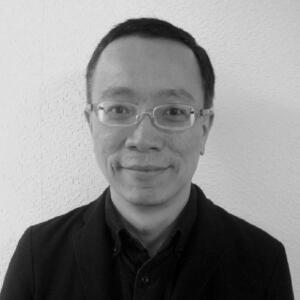
Jafar Suryomenggolo is a scholar of Southeast Asian Studies who earned his PhD from Kyoto University. His research focuses on labour history, state–society relations, environmental governance, and social policy in Southeast Asia, with particular attention to Indonesia. He has held visiting positions at Ca’ Foscari University of Venice, Kyoto University, and Jeonbuk National University (South Korea). His publications include Fearless Speech in Indonesian Women’s Writings: Working-class Feminism from the Global South (2021) and Organising under the Revolution: Unions and the State in Java, 1945–48 (2013). He has also edited and translated several volumes on Southeast Asian political and social history.
University of Artois
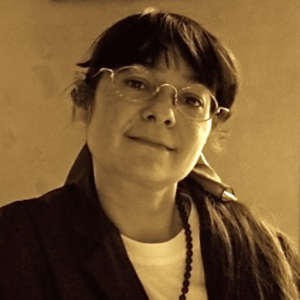
Muriel Périsse is Assistant Professor of Economics at Université d’Artois (Faculty of Economics, Management and Social Sciences) and researcher at Lille Economics & Management (LEM, CNRS). Her teaching focuses on labour economics and industrial relations, particularly at the Master’s level. Her research examines labour market institutions in China and Southeast Asia, labour law, industrial relations, and the role of labour within regional value chains shaped by China’s economic expansion. She is co-editor (with Elsa Lafaye de Micheaux, Stéphane Le Queux and Melisa Serrano) of Labour and Value Chains. Labour Integration amid Labour Exploitation in Southeast Asia (Palgrave, forthcoming 2026). Her work has been published in leading journals in heterodox and institutional economics.

Ca’ Foscari University of Venice
Giuseppe Bolotta is an Associate Professor of Anthropology and History of Southeast Asia at Ca’ Foscari University in Venice, Italy, and a Research Associate at the Asia Research Institute of the National University of Singapore. His research focuses on the cultural politics of childhood, poverty, religion, and rights in Thailand and the Global South, with a recent emphasis on youth movements and democracy. He is the author of Belittled Citizens: The Cultural Politics of Childhood on Bangkok’s Margins (NIAS Press, 2021) and co-editor of Political Theologies and Development in Asia (Manchester University Press, 2020).
University of Milano-Bicocca
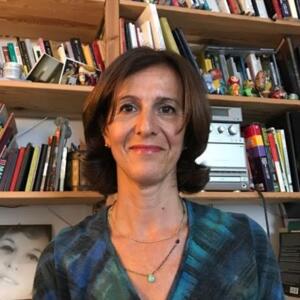
Silvia Vignato is full professor in anthropology at the Università di Milano-Bicocca (UNIMIB). Beside a monograph about Sumatran Hinduism (Au nom de l’hindouisme, L’Harmattan, 2001), and numerous articles on the subject, she has published about Malaysian factory workers and about post-conflict and post-disaster young Acehenese people (children, teenagers, young parents). She has recently edited Dreams of Prosperity: Inequality and Integration in Southeast Asia, Chiang Mai: Silkworm, 2018, and Searching for Work: Small-scale Mobility and Unskilled Labor in Southeast Asia Chiang Mai: Silkworm, 2019, and a monograph in Italian Figlie delle catastrofi: un’etnografia della crescita nella ricostruzione di Aceh, and directed two films: Rezeki. Gold and stone mining in Aceh (2016) and Aceh, After (2020). Vignato, S., Arnez, M. (2022). Worlding Sites and Their Ambiguity: An Introduction. European Journal of East Asian Studies, 21(2), 129-141.

University of Naples “L’Orientale” & T.wai
Pietro Paolo Masina is Professor of East Asian History at the University of Naples “L’Orientale,” where he also directs the Master’s programme in Global Management for China. He is Editor-in-Chief of the European Journal of East Asian Studies and Life Member of Clare Hall, University of Cambridge. His research focuses on the political economy of development in East and Southeast Asia, with particular attention to industrialization, labour regimes, state transformation, and regional integration. He has coordinated and led numerous European Commission–funded research projects and has published extensively on Vietnam and Southeast Asia.

Nanyang Technological University
Xue Gong is an Assistant Professor and Coordinator in China Programme of S. Rajaratnam School of International Studies, Nanyang Technological University, Singapore. Her research focuses on China’s economic statecraft, China-Southeast Asia relations. She also studies state-business relations and regionalism and governance. Dr. Gong has contributed to peer-reviewed journals such as the Journal of Contemporary China, World Development, Political Science Quarterly, European Journal of International Security, International Affairs, the Pacific Review, International Relations of the Asia-Pacific, Contemporary Southeast Asia. She has two co-edited books on China’s Belt and Road Initiative. She also serves as a non-resident scholar at Carnegie China.
Former ADB Director for Southeast Asia
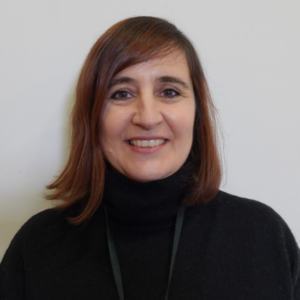
Marzia Mongiorgi is a senior development finance leader with over 28 years of international experience in multilateral institutions, including the Asian Development Bank (ADB) and the United Nations. Her expertise spans development finance, investments design and implementation, rural transformation, and climate integration. At ADB, she held executive roles across Asia, leading sovereign operations, managing complex multi-billion-dollar portfolios, and conducting high-level government negotiations. She has shaped country partnership strategies and corporate portfolio reforms, contributing to institutional performance and development impact. She holds an MSc in Development Economics from the London School of Economics and Political Science (LSE) and a Laurea in Economic and Social Sciences from Bocconi University.
T.wai begins accepting online applications for the first edition of the TOASEAN Summer School.
Applications will be reviewed on a first-come, first-served basis.
All complete applications received by the TOASEAN Program Manager by this date (CET) are evaluated. No applications will be considered.
By this date the last successful applicants receiving an offer must formally accept it and send proof of fees payment (direct bank transfer, all banking expenses must be paid by the candidate) via email.
Upon receiving these, the TOASEAN Program Manager will confirm the candidate’s enrollment. Applicants who should fail to meet this deadline will have their offer withdrawn.
The 2026 TOASEAN Summer School begins in Turin.
The 2026 TOASEAN Summer School ends in Turin.
The TOASEAN Summer School is designed for highly motivated students and professionals seeking an intensive program focused on the politics, society, political economy, and foreign policy of Southeast Asia.
As part of the application process, candidates are required to submit their CV. The selection committee will assess applications based on the following criteria:
Applications are open to students and professionals who have obtained a Bachelor’s honours degree with a classification of 1 or 2:1 (or an equivalent European qualification, such as the Italian Laurea triennale with a minimum grade of 100/110) and who have demonstrated fluency in English.
|
APPLICANT STATUS |
FEES |
|
Students enrolled at university
|
EUR 400.00 |
|
Professionals |
EUR 800.00 |
Torino, the first capital city of united Italy in 1861, is an ancient place. Established by the Romans with a distinctive rectangular grid which mesmerizes visitors to this day, each moment in history has left its mark on the city, generating a legacy of culture, architecture and monuments. In 2012 and 2024 the New York Times devoted to Torino two of its “36 hours in…” pieces.
The Torino 2006 Olympic Winter Games showcased a cosmopolitan city, still attached to its industrial tradition – the now global FCA car manufacture was founded here – while transforming into an Italian hub of technological and cultural innovation with a high quality of life. The UN System has its Staff College here (UNSSC), together with the United Nations Interregional Crime and Justice Research Institute (UNICRI) and the International Training Centre of the International Labour Organization (ITC-ILO). UNESCO has recently approved the creation of a centre for research on world cultural heritage to be based in the baroque Venaria Reale palace, one of several world heritage sites in the area.
World-renowned Juventus football club – one of Torino’s glories – has its brand-new Stadium in town, alongside the world’s second-largest Egyptian antiques museum after Cairo (Museo Egizio), the Automobile Museum, the Cinema Museum (few know that in the early days cinema was being developed here), and the Mountain Museum (Museo Nazionale della Montagna), aptly located on Torino’s hills overlooking the Alps. Torino’s region – Piedmont (Piemonte) – means “at the feet of the mountains” and Europe’s most charming peaks are within a couple of hours drive.
Sampling the local cuisine is a cultural must in Torino. Its informal trattoria, refinded top-end restaurants and exotic ethnic eateries make the city one of the undisputed world capitals of taste, including for its illustrious wine scene, whether one is looking for whites (Gavi, Arneis, Moscato), superb reds (Dolcetto, Grignolino, Barbera, Nebbiolo, Barbaresco and Barolo), or even sparkling wines, which, through Martini & Rossi, gave rise to the tradition of Asti Spumante.
Seemingly closer to the Northern European no-nonsense, hard-working style than it is to Italy’s Mediterranean allure, Torino transforms at sunset: by aperitif time the streets are lit up and buzzing with people enjoying live jazz, exclusive dj sets, the local philharmonic orchestra performances, theatre and opera, but also shows, cabaret, literary cafes, street festivals and crazy notti bianche, all night non-stop events that animate the city streets until dawn.
By plane (Milan) By plane (Torino)
Public Transport Bike sharing Trenitalia (Train) Italo (Train) Car Sharing
Due to international time differences, we strongly advise you to contact the TOASEAN Program Manager by email. We answer email enquiries every day. Should you need to contact us by telephone, please email the Program Manager to fix an appointment.
The email address for enquiries on the TOASEAN Summer School is: info@toasean.it
We will respond as soon as possible to your email enquiry. However, please be aware that during peak periods the office is very busy and there may be a turnaround time of approximately 48 hours.
The TOASEAN Summer School Program Manager is Ms. Elisa Gasco. Upon appointment, arranged via email, she may be reached at:
“LUIGI EINAUDI” CAMPUS, LUNGODORA SIENA 100/A TORINO – ITALY